West India · Nav-Vari Sarees & Carnival Color
Goa
Goa is unlike any other Indian state — a sun-soaked coastal paradise shaped by centuries of Portuguese influence, vibrant festival culture, and the warmth of the Arabian Sea. Its fashion reflects this fascinating blend of East and West, tradition and festivity.
Traditional Goan women wear the Nav-Vari saree, similar to the nine-yard sarees of Maharashtra, draped in a way that allows ease of movement. The saree is tied in the Kashtha style — pulled between the legs and tucked at the back — allowing women to move freely. Goans also wear Kunbi sarees, the most ancient traditional textile of the original Goan inhabitants, woven on handlooms in red and white checks.
The Goa Carnival — one of India's largest and most colourful carnivals, rooted in Catholic Portuguese tradition — inspires vibrant, festive dressing. During Carnival season, women wear bold, colorful printed dresses and Indo-Portuguese fusion attire. The feast day of the patron saints and Shigmo (the Goan version of Holi) also bring out elaborate, region-specific costumes.
Goa's fashion has always inspired me — that fearlessness with color and the way Eastern and Western aesthetics blend so naturally. My dress here was directly inspired by the Goa Carnival's energy. The Kunbi saree, in particular, is something I find deeply beautiful in its simplicity.
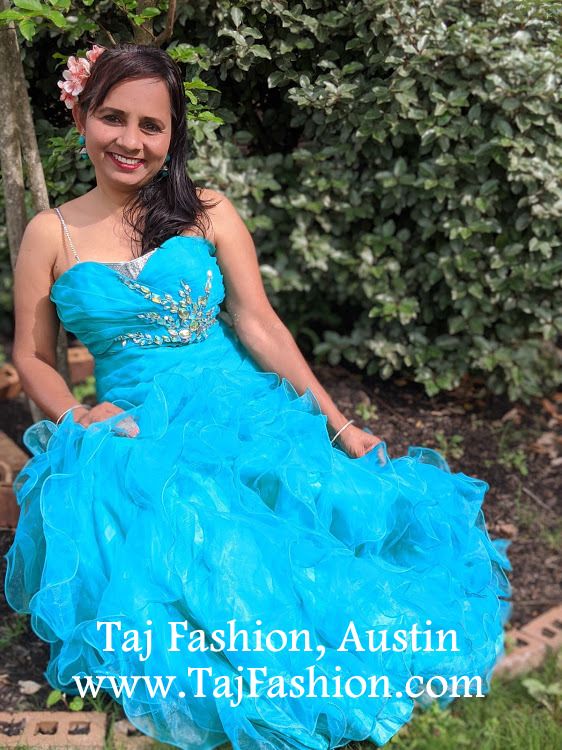
Nisha in a Goa Carnival-inspired outfit — bold, festive, and colorful
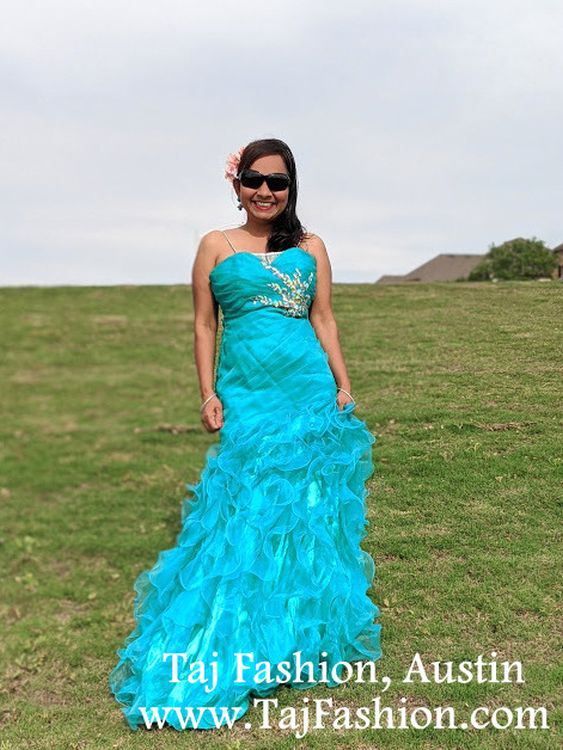
The Nav-Vari draping style allows ease of movement
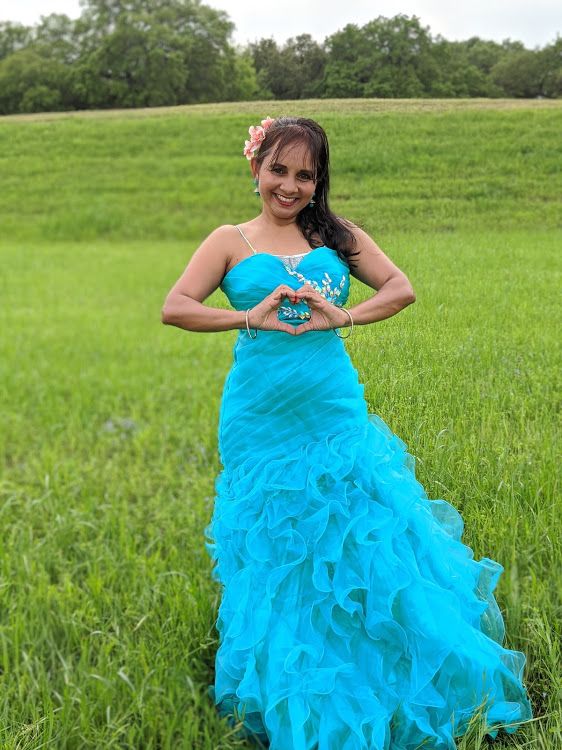
Goa's fashion blends Indian tradition with Portuguese festivity
West India · Chaniya Choli, Mirrors & Bandhani
Gujarat
Gujarat — known as the Jewel of Western India — is one of the most culturally vibrant states in India, and one of the most widely represented communities in the United States. From the vast white salt flats of the Rann of Kutch to the ancient stepwells of Patan, Gujarat's culture is as rich as its textiles.
The signature traditional attire for Gujarati women is the Chaniya Choli (also called Ghagra Choli or Ghaghara) — a full, flared skirt (chaniya or ghagra), a fitted blouse (choli), and a dupatta or odhni draped elegantly over one shoulder. The Chaniyo — a variation of the lehenga — is stitched with dazzling mirror work, beadwork, and thread embroidery. Bright colors: saffron, emerald, magenta, and royal blue dominate.
The greatest showcase of Gujarati costume is the nine nights of Navratri, when women wear their finest chaniya choli to dance Garba and Dandiya Raas. The embroidery traditions of Gujarat are world-renowned: Bandhani (tie-and-dye), Banni embroidery, Rabari embroidery, and Patola weaving (the prized double-ikat silk) are all distinct to the region.
Jewelry is heavy, artistic, and primarily in silver — wide bangles, layered necklaces, and elaborate hair ornaments complement every outfit.
Gujarat is close to my heart — the Chaniya Choli I wear in these photos is one of my favorites. The mirror work catches the light in a way that makes you feel like you're wearing celebration itself. During Navratri, the whole community comes alive in these outfits.
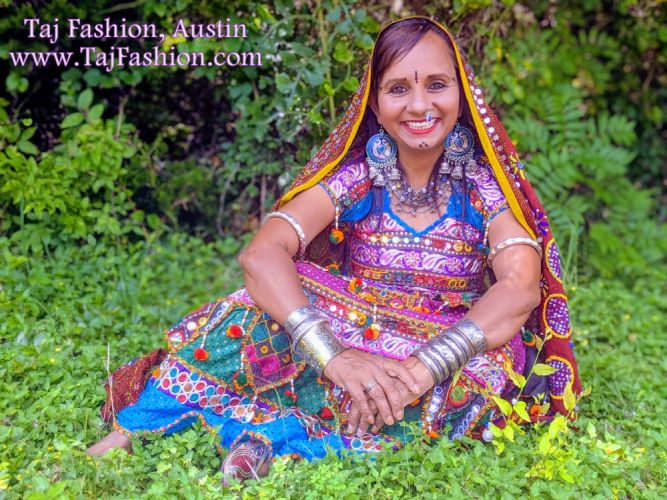
Chaniya Choli with signature Gujarati mirror work
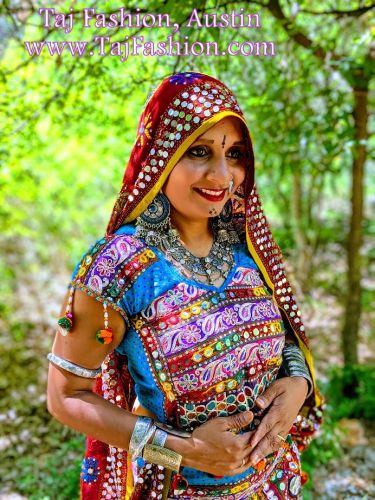
Vibrant mirror work (shisha) and thread embroidery — Gujarat's signature style
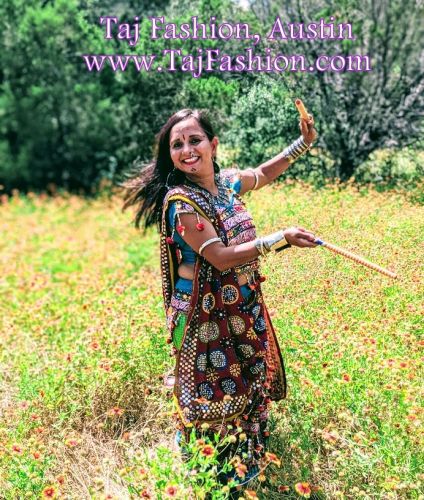
Bandhani tie-and-dye fabrics in festive colors for Navratri
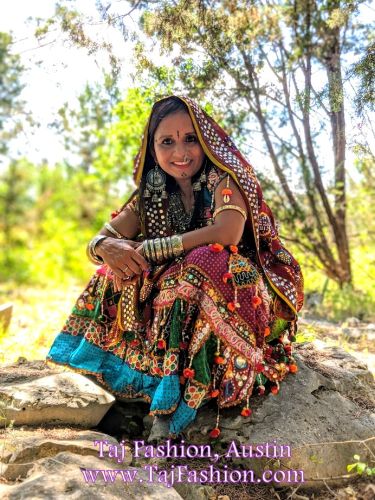
Heavy silver jewelry completes the Gujarati ensemble
North India (Himalayas) · Pashmina, Embroidery & Mountain Elegance
Himachal Pradesh
Himachal Pradesh nestles in the lap of the mighty Himalayas — a state of snow-capped peaks, cedar forests, apple orchards, and deeply preserved mountain culture. The clothing of Himachal reflects both the cold climate and the rich artistic heritage of its people.
Women traditionally wear a Kurta paired with a Ghagra Lehenga Choli — long, ankle-length garments with intricate embroidery. The dresses are characteristically full-length and topped with elaborate needlework in red and maroon — the traditionally dominant colors of the region.
The most iconic Himachali accessory is the Rahide — a colorful head scarf woven in various fabrics and patterns, worn by women as both adornment and cultural marker. Kullu shawls — handwoven woolen shawls with bold geometric patterns in bright colors — are recognized worldwide and are a Geographical Indication (GI) product of Himachal.
The state is also renowned for its Pashmina shawls — among the finest and softest in the world, made from the fleece of the Changthangi goat raised at high altitudes. Women wear bulky silver ornaments, and silver jewelry with coral and turquoise stones is considered traditional and auspicious.
Himachal Pradesh stopped me in my tracks when I first experienced these textiles. The Kullu shawl's geometric patterns and those deep reds — there's a majesty to mountain fashion that is unlike anything from the plains. The Rahide head scarf is so beautifully practical and ornamental at once.
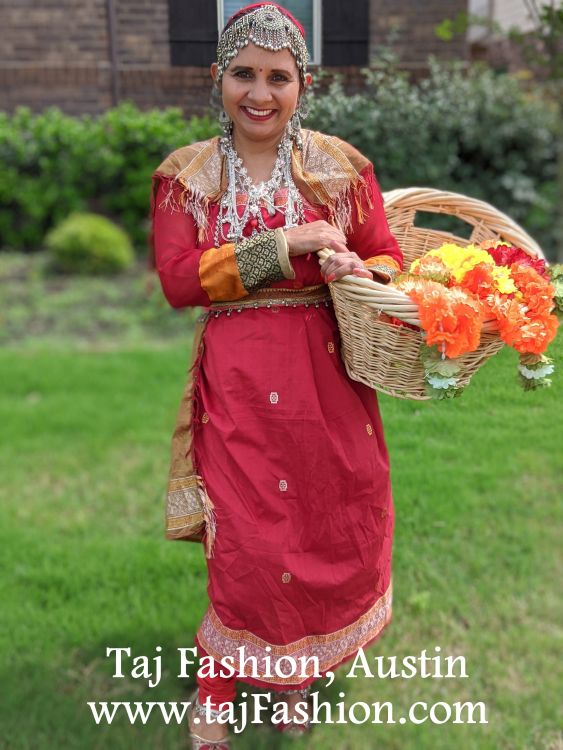
Ghagra Lehenga Choli with intricate embroidery in red and maroon
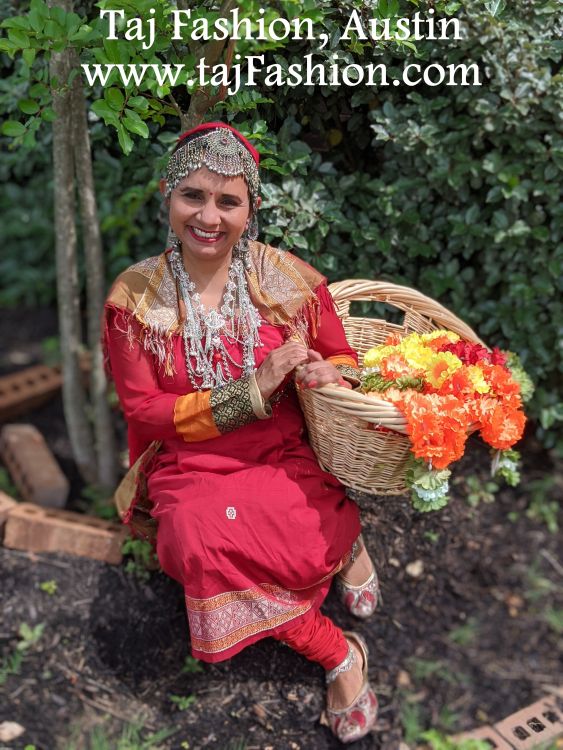
The Rahide — Himachal's iconic colorful head scarf
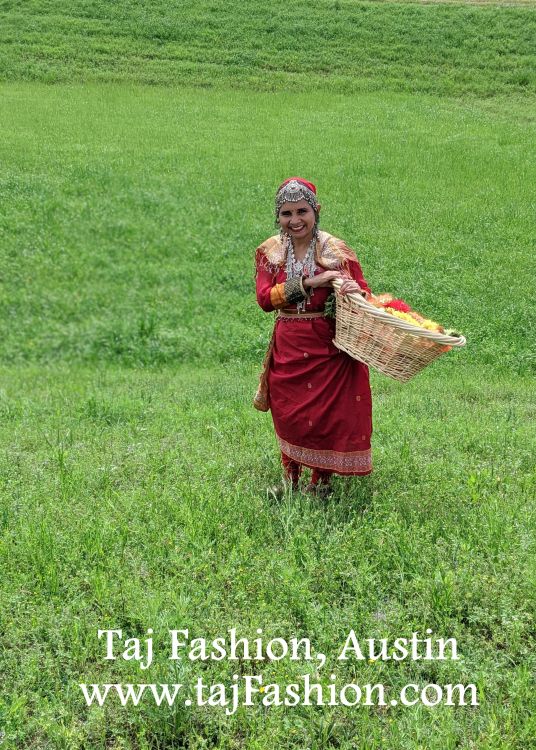
Ankle-length garments with Himalayan embroidery patterns
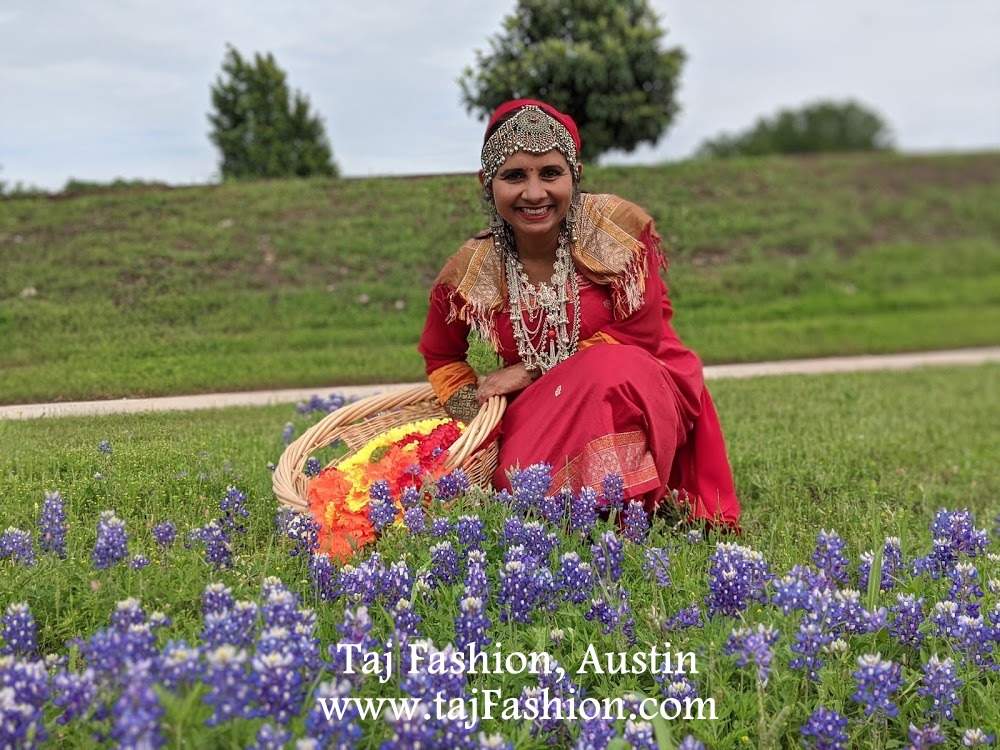
Heavy silver ornaments with coral and turquoise — traditional Himachali jewelry
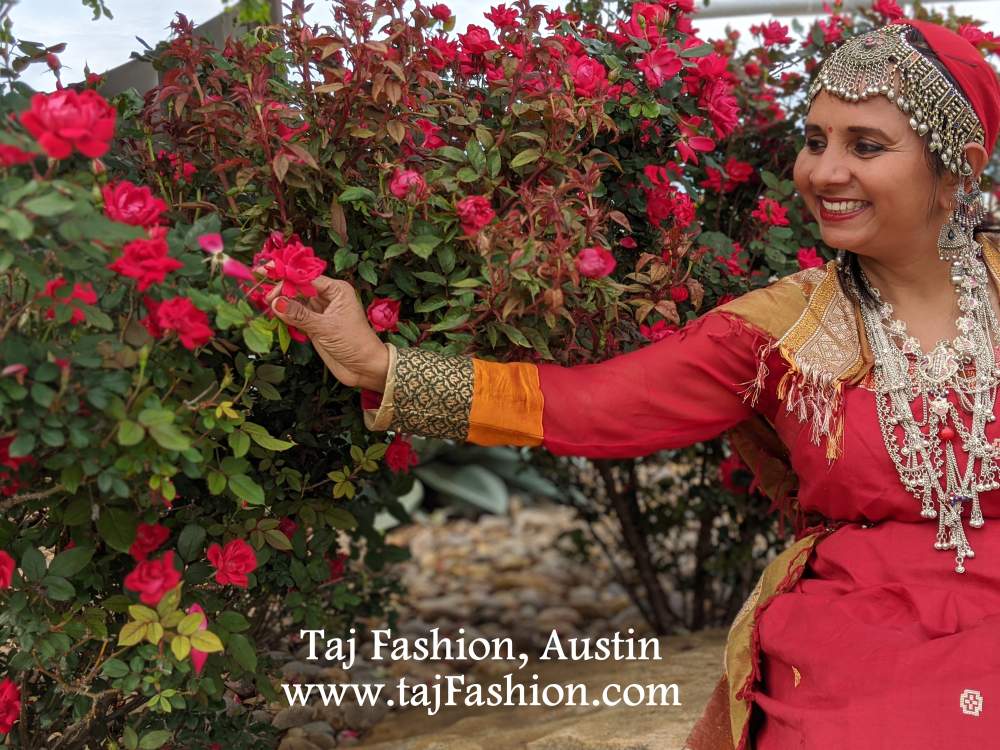
Mountain elegance: long kurta and embroidered choli
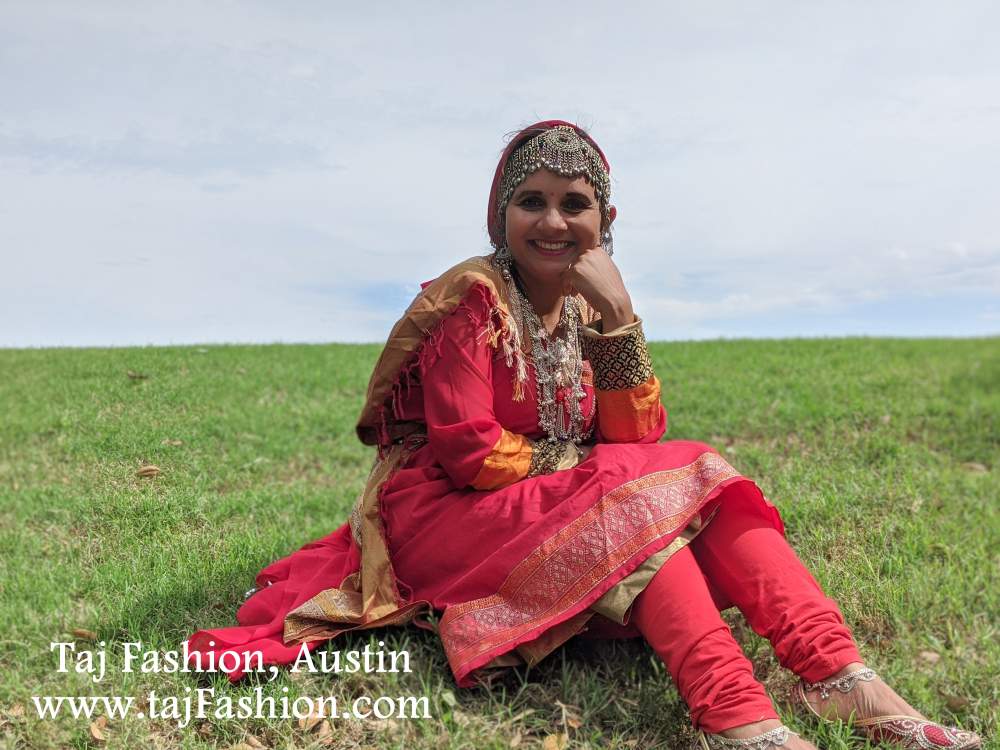
Kullu shawl — a GI-protected weaving tradition of the Himalayan valleys
Visit Taj Fashion, Austin TX
Find Your State's Traditional Look
Nisha stocks sarees, lehengas, and regional garments from across India. Come explore — by appointment, with her full personal attention.