South India · Pochampally Ikat & the Fusion of Two Cultures
Telangana
Telangana, India's newest state (formed in 2014 as the 29th state), occupies a fascinating geographical and cultural position — the meeting point of North and South India. Its textiles reflect this duality in extraordinary ways.
The state is one of India's most important centers of handloom saree production. The most celebrated is the Pochampally Saree — woven in the village of Pochampally near Hyderabad using the ikat or tie-and-dye weave technique. In Pochampally ikat, both the warp and weft threads are resist-dyed before weaving, creating geometric patterns — particularly the distinctive diamond motif — that appear to blur and bleed at the edges, giving ikat its characteristic look. This technique is so significant that Pochampally ikat received GI (Geographical Indication) status and was recognized by UNESCO.
The Gadwal Saree is another Telangana treasure: a cotton body with a silk pallu and zari border, woven in the Gadwal town near the Krishna river. The Narayanpet Saree is known for its bold cotton checks with a silk border.
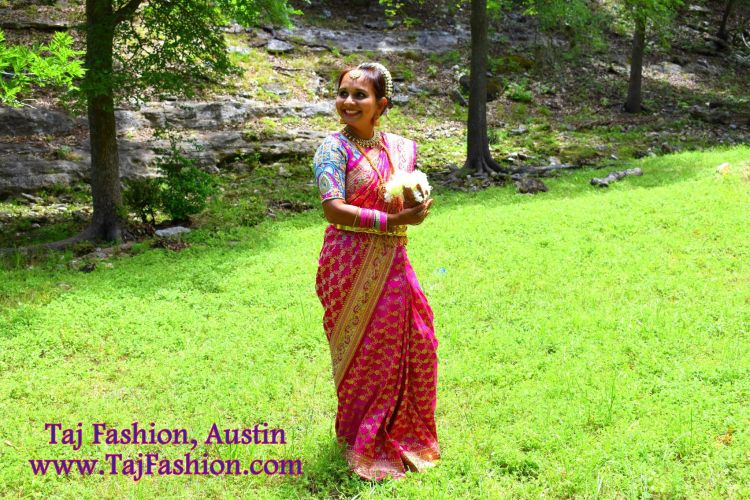
Women in Telangana wear sarees for all occasions; younger women and girls traditionally wore the Langa Voni (also called Pavadai Daavani or half-saree) — a skirt, blouse, and half-drape that marks the transition from girlhood to womanhood.
The handloom sarees I stock from Telangana — Pochampally and Gadwal — are some of the pieces I'm most proud to carry. When you hold a Pochampally ikat and realize the entire pattern was created thread by thread before a single pass of the loom, it changes how you see it. These are not just beautiful fabrics; they're engineering feats.
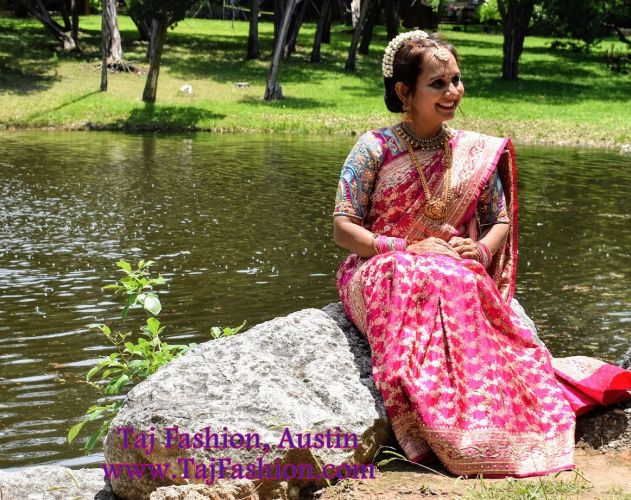
Pochampally ikat saree — threads dyed before weaving to create geometric patterns
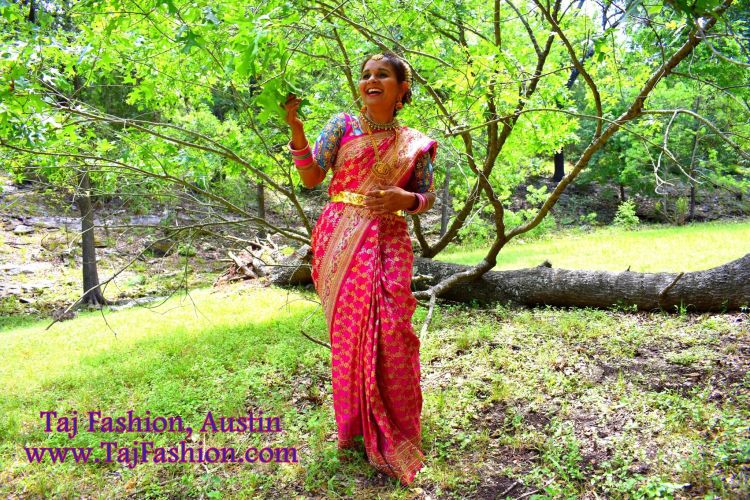
Telangana saree with traditional gold jewelry — the fusion of North and South aesthetics
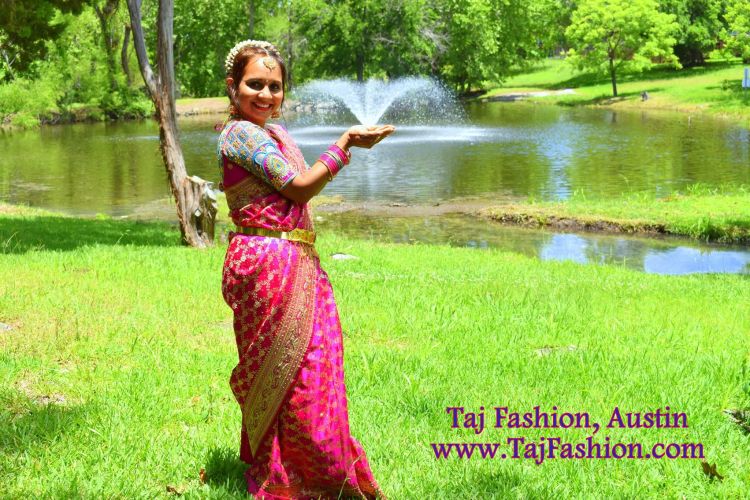
Gadwal saree — cotton body with a signature silk zari pallu
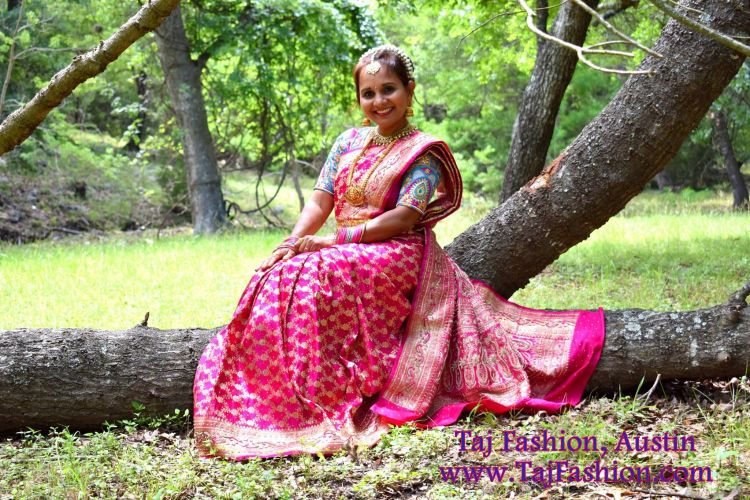
Vibrant handloom sarees with traditional Telangana gold and stone jewelry
The signature Pochampally diamond motif — a UNESCO-recognized weaving tradition
North India (Himalayas) · Land of Gods — Garhwali & Kumaoni Traditions
Uttarakhand
Uttarakhand — known as Devbhoomi, the Land of Gods — is the source of the Ganges and Yamuna rivers, home to pilgrimage towns like Haridwar, Rishikesh, Badrinath, and Kedarnath. Its clothing traditions differ between the Garhwal region (west) and the Kumaon region (east).
In the Garhwal region, women wear the saree in a distinctive way: the pallu is brought from the back, over the shoulder, and tied at the front. A cloth waistband is tied over the saree — practical for women working in terraced fields and carrying loads on their heads. This style is notably different from all other Indian saree draping traditions. The saree is worn with a full-sleeved Angra (blouse) with large buttons.
The Kumaon region also has its own saree style and the distinctive Pichwai printed fabrics. Both communities wear headscarves — partly as protection from mountain sun and wind, partly as a sign of married status.
Married women in Uttarakhand follow a rich ornamental tradition: the Hansuli (silver neck ornament), Guloband (silver choker), Chareu (black bead and silver necklace), silver payal, and Bichuye (toe rings). Most dramatically, the Nath (nose ring) can be so large it covers half the face — among the largest nose rings worn anywhere in India, symbolizing marital status and prosperity.
What moves me about Uttarakhand is how the landscape itself has shaped the clothing. That tucked-front pallu isn't stylistic — it's deeply functional for mountain life. And that Nath... I tried wearing it and I understand why it's considered the most powerful piece of jewelry a Garhwali woman wears.
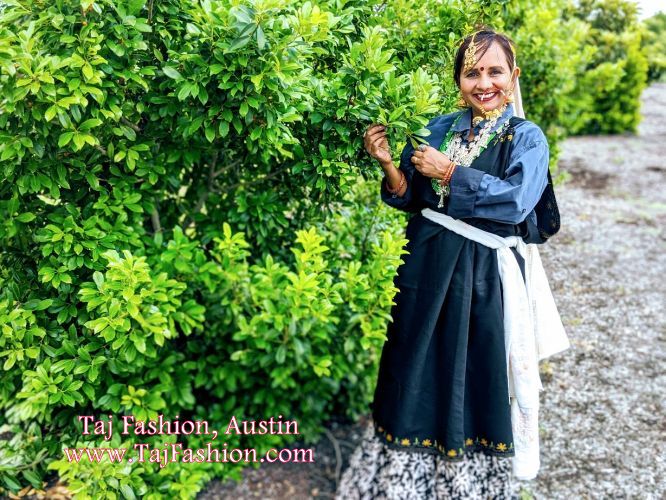
Garhwali saree — pallu brought front and tied, with a cloth waistband
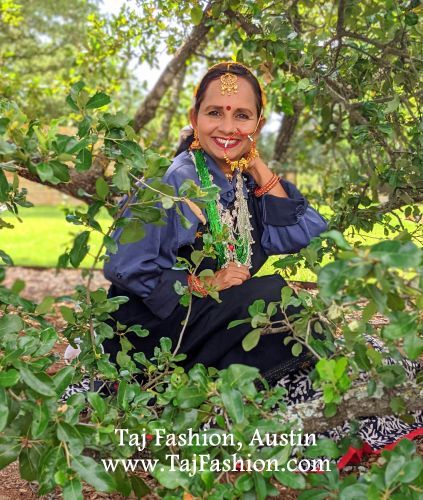
The Angra blouse — full-sleeved with large buttons, worn across Garhwal
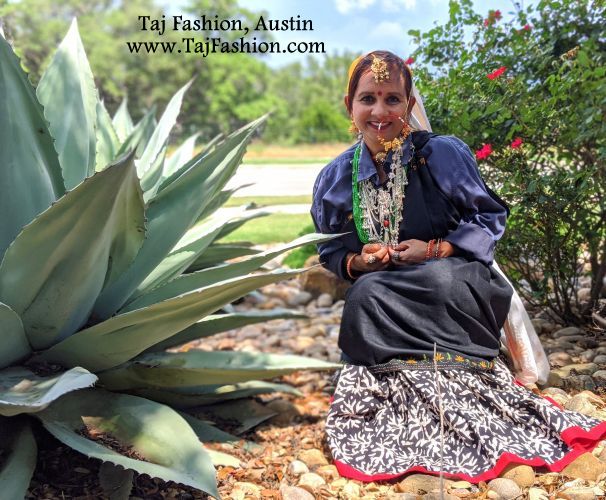
The large Nath — Uttarakhand's most distinctive piece of bridal jewelry
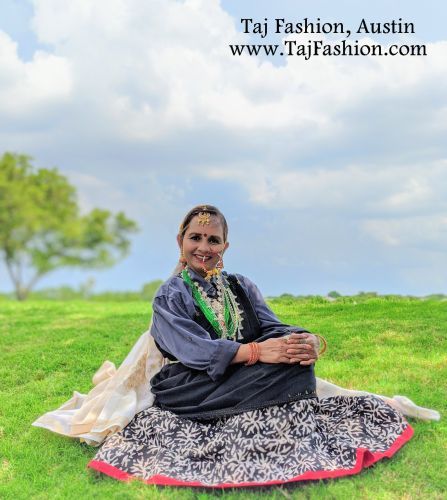
Headscarves protect from mountain weather and signify married status
East India · Garad, Jamdani & the Bengali Saree Aesthetic
West Bengal
West Bengal is a state of extraordinary cultural richness — the land of Rabindranath Tagore, Durga Puja, Mishti Doi, and one of India's most refined saree traditions. Bengali sartorial legacy draws from royal patronage, the nobility, and master weavers whose techniques have been practiced for generations.
What immediately distinguishes Bengali saree wearing is the draping style: in West Bengal, the pallu comes to the front rather than being thrown over the back shoulder. This front-pallu style, often with a distinctive pleated arrangement, is the mark of an authentic Bengali saree worn properly.
The most iconic Bengali saree is the Garad — a white silk saree with a bright red border and red stripes in the pallu. Garad means "white" in Bengali, and this unbleached or pure white silk with its scarlet border carries deep religious significance. Worn for worship, weddings, and auspicious ceremonies, the Garad is always paired with its counterpart the Korial — a saree with intricate buti (flower) patterns woven into the body. Together they form the classic Bengali bridal and ceremonial ensemble.
The Dhakai Jamdani — the finest handwoven muslin from Dhaka with intricate supplementary weft motifs — is considered one of the world's great textile traditions and has UNESCO Intangible Cultural Heritage status. Baluchari sarees feature mythological scenes from the Mahabharata and Ramayana woven in silk. Tant cotton sarees are Bengal's everyday classic.
Bengali saree culture is profound. The Garad in my photos — white silk with that red border — carries so much weight. It's the saree worn for the most sacred moments in a Bengali woman's life. The front-pallu style takes practice but once you see it, you recognize it instantly as distinctively Bengali.
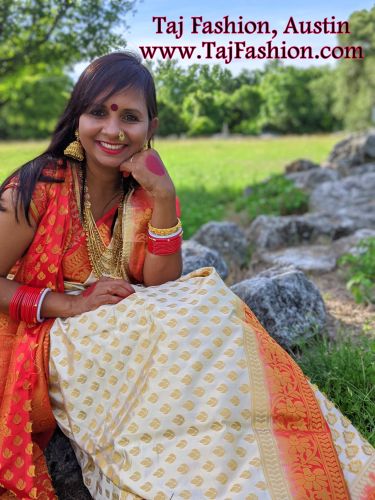
Nisha in the Garad — white silk with a sacred red border, draped Bengali-style
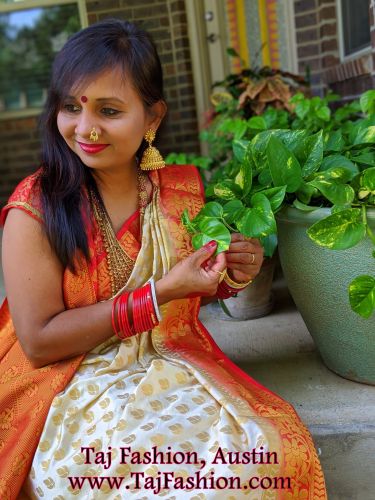
The Korial — white silk with intricate buti (flower) patterns woven throughout
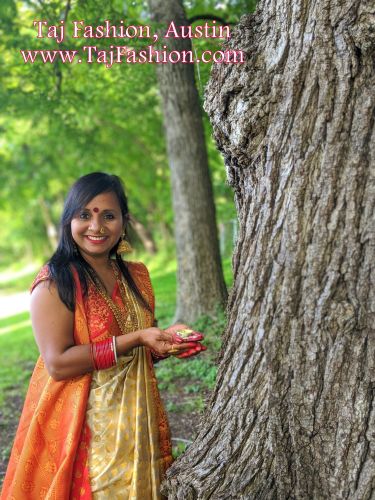
The Bengali front-pallu draping — the pallu comes forward, not over the back shoulder
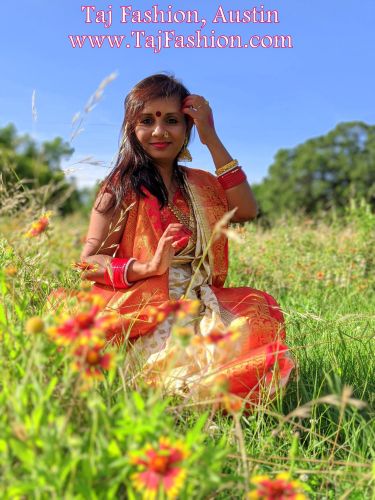
Ivory conch shell and red lacquer bangles — the traditional Bengali jewelry with Garad
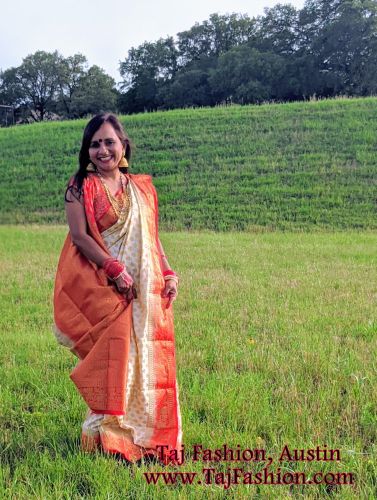
The Garad and Korial ensemble — woven for the most sacred moments in Bengali life
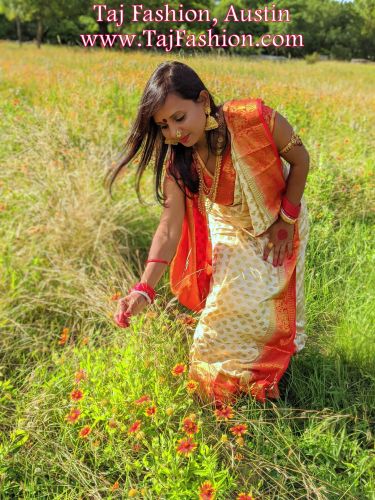
Detail: the fine weave of Bengali handloom — a UNESCO-recognized textile heritage
Visit Taj Fashion, Austin TX
Find Your State's Traditional Look
Nisha stocks sarees, lehengas, and regional garments from across India. Come explore — by appointment, with her full personal attention.