North India · Phulkari, Patiala & the Land of Five Rivers
Punjab
Punjab — land of five rivers — is one of the most culturally vibrant and internationally recognized states in India. Its food, music (Bhangra, Giddha), and fashion have traveled far beyond the subcontinent, and Punjabi clothing is among the most recognizable Indian dress worldwide.
The traditional dress for Punjabi women is the Salwar Kameez (also called Punjabi Suit): a long or short kameez (tunic) worn with salwar (pants) and a dupatta or chunni. The kameez of Punjab is traditionally wide and falls to the knee, cut straight. What elevates the Punjabi suit to an art form is Phulkari embroidery — a floss silk thread-work technique where flowers (phool) cover almost every inch of the fabric in geometric patterns. A Phulkari dupatta is considered a prized possession, often passed between generations.
The most famous bottom style is the Patiala Salwar — a wide, heavily pleated trouser originating in the royal court of Patiala. Though initially worn by men, the Patiala became the most iconic women's salwar. Jutti (Punjabi shoes) with embroidery in real gold or silver threads and Parandi (hair braiding accessories bedecked with jewelry) complete the ensemble.
Nisha also tried the traditional Punjabi men's dress: a simple kurta with the Tehmat/Tamba — the Punjabi dhoti worn by men at celebrations and religious occasions.
Punjab's fashion has an energy all its own — the Phulkari is not just embroidery, it's a language. The Patiala Salwar is the most comfortable, playful garment — I wear it often. And the Jutti? 400 years of royal tradition on your feet. I had to try the men's Tehmat too, of course.
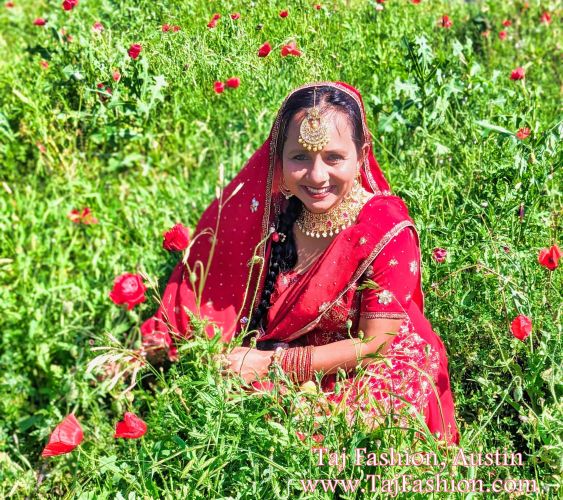
Nisha in a bright Punjabi Salwar Kameez — Phulkari embroidery on the dupatta
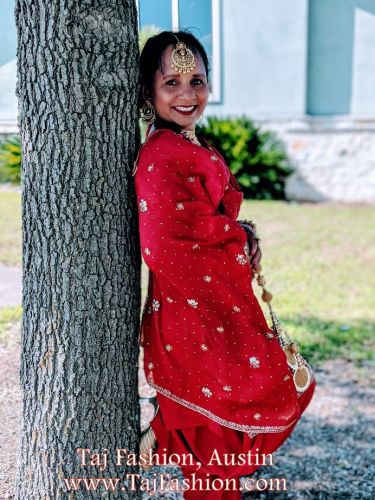
The Patiala Salwar — wide, pleated, and originating from the royal court
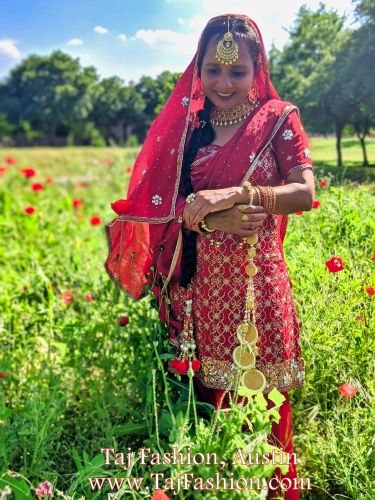
Phulkari detail — geometric floss silk flowers densely covering the fabric
Jutti — 400-year-old embroidered shoes, traditionally in real gold or silver thread
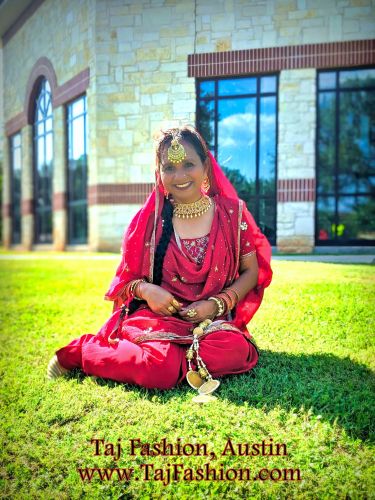
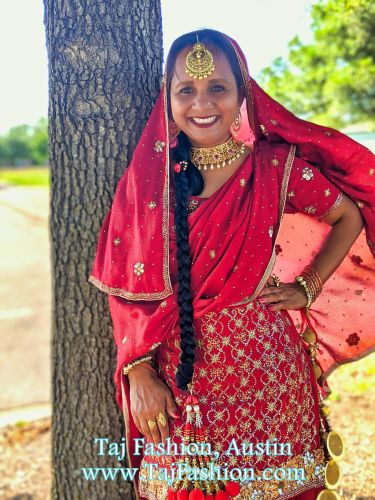
Parandi — the jeweled hair braiding accessory, matched with tikka and bangles
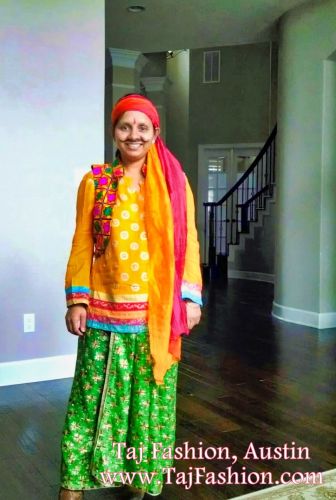
Nisha in the Punjabi men's Tehmat/Tamba — the dhoti worn for celebrations
North-West India · Ghagra, Odhni & Royal Jewels of the Desert
Rajasthan
Rajasthan — the Land of Kings — is India's most visually dramatic state: a place of magnificent forts, mirror-bright palaces, painted havelis, and a color palette that defies the desert landscape. Its fashion is equally extraordinary — bold, layered, and laden with the history of its royal courts.
Traditional Rajasthani women's attire consists of three pieces: the Ghagra (a full-length, heavily embroidered and pleated skirt), the Choli (fitted blouse), and the Odhni (a long dupatta used as a veil, approximately 2.5 meters long). The most celebrated textile techniques are Lahariya (diagonal stripe tie-and-dye), Bandhej/Bandhani (dot tie-and-dye), Chundri, and Gota-Patti work — the application of flat gold and silver ribbon trim that gives Rajasthani garments their distinctive regal shimmer.
The Rajasthani jewelry system is one of the most elaborate in all of India. Necklaces include Jadau sets, Aad (chokers), and Raani Har (necklaces reaching the belly button). The complete traditional jewelry ensemble encompasses Kaanbali or Surliya (earrings), Nathani (nosepins), Bajubandh (armlets), Rakhdi/Borla (maang tikkas), Tagdi/Kardhani (waist chains), Payal (anklets), Bangadi (bangles), Bichuwa (toe rings), and finger rings — each piece with its own name, symbolism, and occasion.
Rajasthan is pure spectacle. When I wear a Rajasthani Ghagra and put on the complete jewelry set — tikka, nath, waist chain, anklets, toe rings — I understand why this tradition has endured for centuries. Every piece tells a story. The Gota-Patti work catches the sunlight like nothing else.
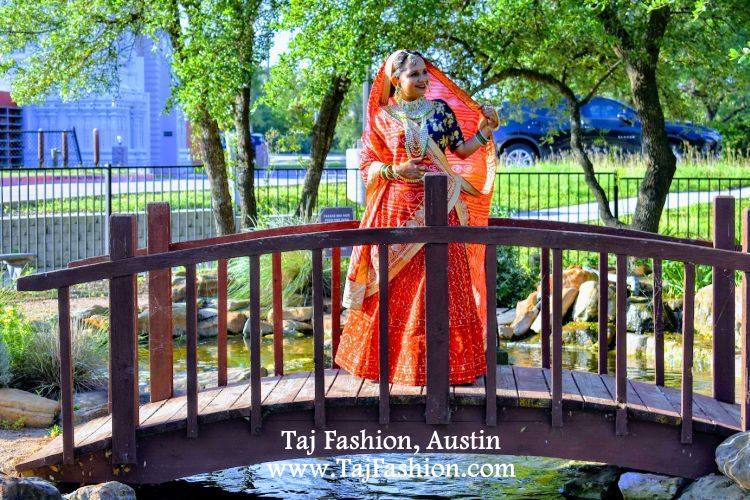
Nisha in the Rajasthani Ghagra Choli — a symphony of color and embroidery
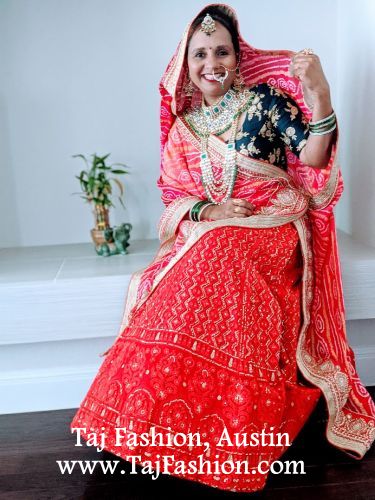
Gota-Patti — flat gold ribbon trim that gives Rajasthani garments their royal shimmer
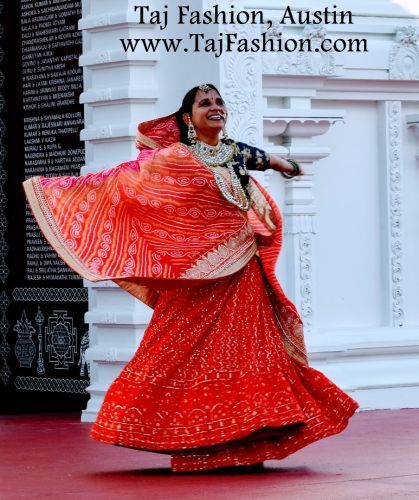
Bandhani tie-and-dye — Rajasthan's iconic dot-pattern textile
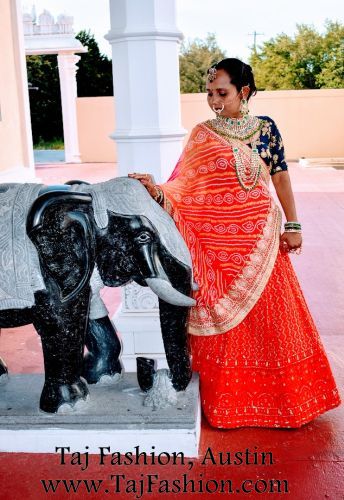
The complete Rajasthani jewelry ensemble — tikka, nath, waist chain, anklets, and toe rings
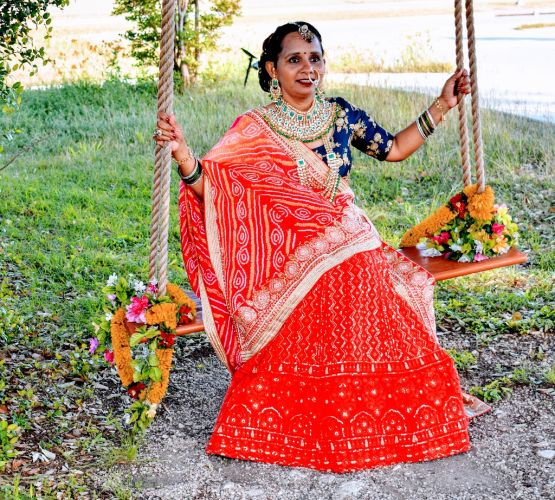
The Odhni — a 2.5-metre veil tucked, draped, and thrown gracefully over the head
North-East India (Himalayas) · Pharia, Cholo & the Three Cultures of the Mountain State
Sikkim
Sikkim is a tiny Himalayan state bordering China, Bhutan, and Nepal — and its clothing reflects the extraordinary cultural meeting point of three distinct indigenous communities: the Lepchas, the Bhutias, and the Nepalis.
Each community has its own traditional dress. Nisha wears the Pharia — the traditional dress of Nepali women in Sikkim. It consists of a wrapped cloth draping the body, worn with the Chaubandi Cholo — a long, loose blouse fastened on four sides (chau = four, bandi = fastened). For extra coverage, the upper body is wrapped with the Hembari, a printed cloth. The Majetro shawl and the Pachauri (a colorful cloth suspended from head to waist during dance) complete the Nepali ensemble.
The Bhutia community wears the Kho — a large rectangular cloth wrapped around the body and fastened at the shoulder. The Lepcha women wear the Dumvum or Dum — a striped woven cloth worn as a wrap dress.
Sikkimese jewelry is delicate and Himalayan in aesthetic: the Sir-Bandi (tiara), Kantha necklace, Naugeri (pearl necklace), Tilhari (green bead with gold pendant), and Charanihari complete the traditional Nepali bridal look.
Sikkim surprised me. Three distinct clothing traditions coexisting in one small mountain state — each with its own grammar of fabric, draping, and ornament. The Pharia is one of the most graceful wraps I've worn. The Himalayan aesthetic has a serenity to it that I find very beautiful.
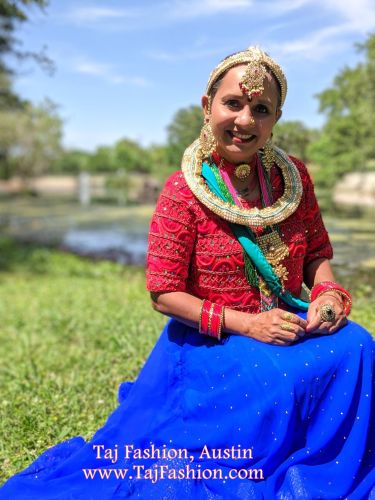
Nisha in the Pharia — traditional dress of Nepali women in Sikkim
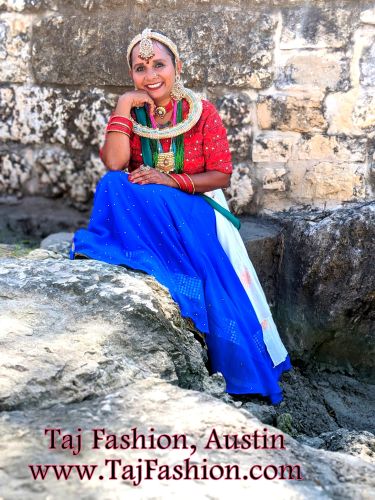
The Chaubandi Cholo — a blouse fastened on four sides in the Nepali tradition
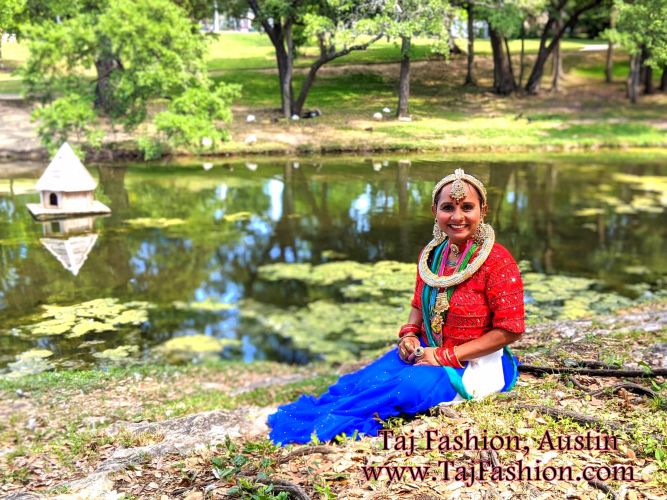
Hembari — a beautiful printed cloth wrapped around the upper body
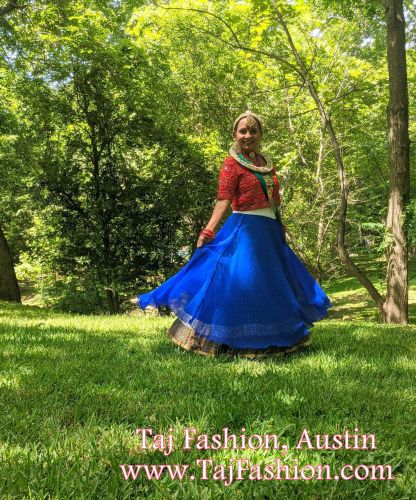
Himalayan jewelry — Sir-Bandi tiara, Tilhari green bead pendant, Kantha necklace
Visit Taj Fashion, Austin TX
Find Your State's Traditional Look
Nisha stocks sarees, lehengas, and regional garments from across India. Come explore — by appointment, with her full personal attention.